
Antibody labeling kits are essential tools for biologists, immunologists, and researchers looking to customize antibodies for various applications. These kits simplify the process of attaching labels such as fluorescent dyes, enzymes, or biotin to antibodies, enabling targeted detection in assays like flow cytometry, immunofluorescence, ELISA, and Western blotting. With advancements in conjugation technologies, antibody labeling kits offer a straightforward solution to streamline experiments and produce reproducible results.
Why Use Antibody Labeling Kits?
Antibody labeling enables the direct detection of a specific antigen by attaching a detectable marker to the antibody, which can be visualized or quantified. Labeling antibodies manually can be a labor-intensive and error-prone process. Antibody labeling kits provide ready-to-use reagents and protocols that allow researchers to efficiently conjugate antibodies to labels with minimal hands-on time.
Learn more about antibody labeling and its importance in research.
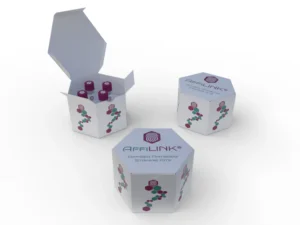
Common Labels in Antibody Labeling Kits
- Fluorescent Dyes
Fluorescent dyes, such as FITC (fluorescein isothiocyanate), PE (phycoerythrin), or Alexa Fluor dyes, are widely used in flow cytometry and immunofluorescence assays for direct visualization of antibody-antigen interactions. These dyes emit light when excited at specific wavelengths, allowing researchers to detect and quantify labeled cells or proteins.
Explore the role of fluorescent dyes in flow cytometry. - Enzymes
Enzyme conjugation, such as horseradish peroxidase (HRP) or alkaline phosphatase (AP), is used in colorimetric assays like ELISA or Western blotting. When substrates are added, the enzymes catalyze a reaction that generates a detectable signal, typically a color change, allowing for the quantification of antigen-antibody binding events.
Learn about enzyme-conjugated antibodies in ELISA. - Biotin
Biotinylation is another popular labeling technique, often used in conjunction with streptavidin to enhance signal detection. Biotin-labeled antibodies can bind to streptavidin-coated surfaces or beads, allowing for versatile applications in affinity purification, immunoprecipitation, and imaging.
More about biotin-streptavidin systems in research. - Gold Nanoparticles
Gold nanoparticles provide a visible signal in lateral flow assays (LFAs) and immunohistochemistry (IHC). Their unique properties allow for high sensitivity and stability, making them ideal for use in diagnostic tests such as rapid antigen detection kits.
Learn more about gold nanoparticles in diagnostics.
Advantages of Antibody Labeling Kits
- Time Efficiency
Antibody labeling kits dramatically reduce the time required for conjugation by providing pre-optimized reagents and protocols. This enables researchers to quickly label their antibodies and proceed to experiments without the need for tedious buffer preparations or complex conjugation procedures.
Discover how antibody labeling improves workflow. - Improved Reproducibility
Kits ensure consistent results by minimizing variability in labeling efficiency. This is especially important in experiments that require quantification, as inconsistent labeling can lead to inaccurate results.
Reproducibility in antibody-based assays. - Scalability
Whether for small-scale research or large-scale production, antibody labeling kits can accommodate varying amounts of antibody, from micrograms to milligrams, ensuring flexibility in labeling projects.
Scaling up antibody labeling for production. - Customizable Labels
Many kits provide the flexibility to choose the label that best suits your experimental needs. This allows researchers to tailor their antibodies for specific assays, whether it be for fluorescence-based detection or colorimetric assays.
Custom antibody labeling solutions in research.

Applications of Antibody Labeling Kits
- Flow Cytometry
Antibody labeling kits are widely used to label antibodies with fluorochromes for flow cytometry, where they are used to identify and quantify cell surface or intracellular proteins in heterogeneous cell populations.
Flow cytometry in immunology. - Immunofluorescence
Fluorescent-labeled antibodies are essential for visualizing cellular structures and protein localization in immunofluorescence microscopy. These kits help generate highly specific probes for detecting target antigens in fixed or live cells.
Immunofluorescence techniques and applications. - Western Blotting
Enzyme-labeled antibodies are frequently used in Western blotting to detect specific proteins from a complex mixture of proteins. Antibody labeling kits simplify the process of conjugating HRP or AP to primary or secondary antibodies for reliable protein detection.
Western blot detection strategies. - ELISA
In ELISA, enzyme-labeled antibodies bind to antigens, and the resulting signal is quantified to determine antigen concentration. Kits for antibody labeling ensure that antibodies are properly conjugated to enzymes, leading to accurate, reproducible results in diagnostic and research settings.
ELISA protocols and enzyme conjugation. - Immunoprecipitation and Affinity Purification
Biotin-labeled antibodies are commonly used in immunoprecipitation and affinity purification to isolate target proteins from a complex mixture. Streptavidin-coated beads or plates capture the biotin-labeled antibody-antigen complexes, which are then analyzed.
More on immunoprecipitation techniques.
Troubleshooting Antibody Labeling
Despite the streamlined nature of labeling kits, there are occasional challenges that researchers may encounter:
- Low Labeling Efficiency
If the antibody is not sufficiently labeled, it may be due to incorrect antibody concentration or poor buffer conditions. Ensuring that the antibody is at the correct concentration and that the labeling reaction occurs in the recommended buffer can improve efficiency.
Optimizing antibody labeling efficiency. - Non-Specific Binding
Non-specific binding can occur if there is excessive label-to-antibody ratio, leading to random interactions with non-target proteins. Adjusting the labeling ratio can help mitigate this issue.
Reducing non-specific binding in antibody assays. - Fluorescence Quenching
Fluorescence quenching may occur if the fluorophore is exposed to light or chemicals during labeling. Protecting fluorochrome-labeled antibodies from light and minimizing exposure to quenching agents will maintain the signal integrity.
Preventing fluorescence quenching.
Conclusion
Antibody labeling kits offer a reliable and efficient way to label antibodies for a wide range of applications, from basic research to diagnostics. With simplified protocols and pre-optimized reagents, these kits enable researchers to produce high-quality labeled antibodies with minimal hands-on time, ensuring reproducible results across various platforms.